Top Surgeons

red_arrow

Cost Estimates

green_arrow

Second Opinion

yellow_arrow

EMI Calculator

blue_arrow

Insurance Checker

yellow_arrow

Request a call back

Speak to one of our representatives by filling the form below.

Total Knee Replacement Surgery (TKR) icon

Procedure Name

Arthroscopic Meniscectomy
Total Knee Replacement Surgery (TKR) icon

Surgery Type

Minimally Invasive
Total Knee Replacement Surgery (TKR) icon

Hospital Stay

Nil
Total Knee Replacement Surgery (TKR) icon

Duration of Surgery

1-2 Hours
Total Knee Replacement Surgery (TKR) icon

Type of Anaesthesia

General Anesthesia
Total Knee Replacement Surgery (TKR) icon

Full Recovery

4-6 Weeks

Overview

Meniscectomy is a surgical repair used to treat a damaged meniscus. A meniscus is a piece of cartilage that helps function your knee and provides a cushioning effect. Surgery is recommended when conservative methods fail to heal a torn meniscus and to correct the altered knee alignment. Arthroscopic meniscectomy is a minimally invasive procedure requiring small incisions to insert an "Arthroscope," a special tube-like device with a camera and surgical instruments at the end of the tube. There are two types of meniscectomy: partial (involves removal of only the damaged part) and complete (involves removal of the entire meniscus). 

What is Arthroscopic Meniscectomy?

Arthroscopic meniscectomy is an outpatient (does not require hospitalization) procedure performed to repair a torn meniscus cartilage. It involves making small incisions through the skin to insert an arthroscope that displays images captured by the camera and projects them on the screen. These images guide the surgeon to view the interior of the surgical site enabling him/her to perform the surgery. Tiny surgical instruments are inserted through the incision near the surgical site, removing the torn meniscus. Each knee has 2 C-shaped cartilages that work as a cushion between your shinbone and thigh bone. The meniscus, when torn, leads to pain, swelling, and stiffness of the knee joint with problems in extending your knee.

Arthroscopic Meniscectomy

There are two types of arthroscopic meniscectomy:

  • Partial meniscectomy - This procedure removes only the torn or damaged part of the meniscus, leaving behind the healthy cartilage. Recommended for a partial meniscus tear.
  • Complete meniscectomy - This procedure involves the removal of the entire meniscus. Recommended for severe, complete tears.

When is Arthroscopic Meniscectomy Recommended?

Arthroscopic meniscectomy is a surgical procedure that is indicated to repair a meniscal tear. The meniscus is a crescent-shaped cartilaginous structure in the knee that helps distribute stress across the knee and acts as a cushion to provide shock absorption. It also stabilizes knee movements and protects the joint margins. 

This cartilage is prone to wear and tear due to aging or any high-impact injury that may cause varying symptoms like severe knee pain and swelling and the inability to bend or straighten your knee fully. 

A meniscal tear is classified into three grades according to an MRI (Magnetic Resonance Imaging) scan, namely-

  • Grade 1- Mild or incomplete tear
  • Grade 2- Moderate/Partial tear
  • Grade 3- Severe/Complete meniscal tear

There are different types of meniscal tears, such as:

  • Radial tear- The tear occurs within the avascular (lack of blood supply) part of the meniscus. 
  • Incomplete tear- These tears occur due to frictional forces resulting in wear and tear of the cartilage.
  • Horizontal tear- This type of tear is seen within the vascular part of the cartilage.
  • Flap tear- In this type of meniscal tear, a part of the cartilage is peeled back and gets stuck in the joint, causing it to "lock up" within it. 
  • Complex tear- This is a combination of radial and horizontal tears.
  • Bucket-handle tear- This type of tear occurs in the center of the meniscus. 

An arthroscopic meniscectomy is recommended to treat:

  • Grade 3 meniscal tear
  • Complex meniscal tear
  • Flap meniscal tear
  • Bucket-handle meniscal tear

How to Prepare For Arthroscopic Meniscectomy?

When you notice symptoms of a meniscal tear, you must consult an orthopedic surgeon (a doctor specializing in the diseases of the bones, joints, ligaments, tendons, and cartilage) for further evaluation and a treatment plan.

Medical History 

  • Your surgeon will discuss the symptoms and record your medical history to evaluate your overall health.
  • You must inform your surgeon if you are suffering from any medical condition like asthma, diabetes (increased blood sugar levels), hypertension (high blood pressure), blood disorders, or any disease related to the heart, lungs, kidneys, or thyroid glands.
  • History of any previous surgery or injury should be informed to the surgeon to help plan a treatment course with minimal post-op complications.
  • Discuss with your surgeon the medications being taken, including blood thinners, anti-inflammatory drugs, antidepressants, or other herbal medications.

Physical Examination

  • Your surgeon examines your affected knee to check for any swelling, tenderness, clicking sound or instability of the joint.
  • Your surgeon will check the range of motion of your affected knee by bending and straightening the knee.

Diagnostic Tests

  • Certain medical tests help evaluate your overall health and confirm the meniscal tear.
  • It may include Blood tests (To check the levels of the blood components like red blood cells, etc.), Urine tests (To check for the presence of any infection), and Imaging tests such as X-rays, MRI, or an ECG (Electrocardiogram).

Preparation 

  • Helps to minimize stress and anxiety and reduce the risk of post-op complications
  • It is important to strengthen your knee muscles before surgery for optimal recovery post-meniscectomy. You will be asked to use an exercise bike or indulge in certain exercises like brisk walking, bending, and straightening your knee.
  • An antiseptic or antimicrobial skin cleanser or soap will be prescribed a week before the surgery to wash your leg(s) thoroughly to decrease your chances of post-op infection.
  • Stop medications like blood thinners, anti-inflammatory drugs, antidepressants, and other herbal supplements two weeks before the surgery to reduce your risk of bleeding.
  • Quit smoking and alcohol consumption at least 2 to 3 weeks before the procedure since they delay wound healing. 
  • You must fast for 6 to 8 hours before the surgery since it is performed under general anesthesia (a numbing agent).

Home Preparation

Precautions should be taken once you go home after the surgery to reduce the risk of falls and re-injury. These include:

  • Arrange a room on the same floor as your living area to avoid climbing up and down the stairs.
  • Adjust your bed height to make getting in and out easy.
  • Install small rails or support bars near your toilet seat and shower area to prevent accidental slipping.
  • Install a modified toilet seat so it is high enough to sit and get up easily. This helps relieve pressure from your operated leg.
  • Arrange for a comfortable and sturdy chair with support to elevate your leg while seated.

How is Arthroscopic Meniscectomy Performed?

On the scheduled day of your surgery, you will be made to sign a consent to allow the surgeon to perform the procedure. 

  1. Once your vitals (blood pressure, blood sugar levels, pulse, heart rate, and oxygen level) are checked by your nurse in charge, you will be prepped for the surgery. 
  2. In the operating theater, the surgical area will be cleaned with an antiseptic solution to remove surface contaminants. 
  3. Your anesthesiologist will administer general anesthesia through an IV (intravenous) line that puts you to sleep. 
  4. The procedure involves the following:

Partial meniscectomy

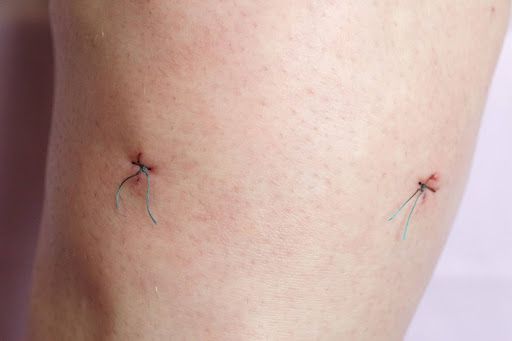
  • Your surgeon will make two small incisions in the knee with a surgical blade known as a scalpel. 
  • A tube-like device known as an arthroscope will be inserted by the surgeon to capture images through the camera. 
  • The images help the surgeon get a clear picture of the interior of the surgical site to carry out the procedure. 
  • Special surgical instruments known as meniscal biters or baskets will be used to trim small pieces of the damaged meniscus. 
  • The healthy part of the meniscus will be left behind. 
  • Another optional instrument is an arthroscopic shaver. 
  • This procedure takes less than an hour. 

Complete meniscectomy 

  • Here, your surgeon will make small incisions or portals on your knee to introduce an arthroscope to view the surgical site.
  • Meniscal bites or arthroscopic shaver will be inserted through other portals which cut the damaged meniscus and remove it completely.
  • The procedure usually takes 60 to 90 minutes.
  1. Your surgeon closes the incisions using resorbable sutures. 
  2. A protective knee brace will be placed for additional support and protection from injury.

What to Expect After Arthroscopic Meniscectomy?

Arthroscopic meniscectomy is an outpatient procedure that does not require hospitalization.

  • Immediately after the surgery, you will be shifted to a recovery room, where you will be observed for an hour or two. Your vitals will be monitored continuously; once stable, you will be sent home. 
  • It is normal to expect mild pain, swelling, and soreness around your operated knee that resolves gradually. Additionally, your surgeon will prescribe painkillers to help ease the pain. Physical therapy can control post-op swelling through ice packs, massage, or electric stimulation. 
  • You can shower the day following your surgery; however, care should be taken not to soak the surgical wound. Avoid swimming, saunas, and tub baths for at least 4 weeks. 
  • You may require crutches to walk to take the stress off the knee as it heals.
  • Your physical therapist will help you plan your physiotherapy program through the following exercises:
    • Heel slides- Lie on your back. Bend your surgical knee by sliding your heel toward your buttocks.
    • Quad sets- Lie on your back with your legs straight. Tighten your thigh muscles pushing your knee down into the bed.
    • Hamstring curls- Lie on your belly on the floor and gently bend your injured knee backward. Bring it closer to your buttocks. Hold for 5 seconds, and then straighten it.
  • You are expected to refrain from lifting heavy objects and avoid strenuous exercises and activities for 4 to 6 weeks. Light activities and exercises can begin 3 weeks post-surgery, including brisk walking, slightly bending, and extending your operated knee.
  • The knee brace will be removed after 6 weeks. You can resume your work and driving by this time once your knee is stabilized. 
  • Complete recovery may take around 4 to 6 weeks, depending on the severity of the meniscal tear and the type of meniscectomy performed.

What Are The Benefits And Risks Associated With Arthroscopic Meniscectomy?

Arthroscopic meniscectomy is a minimally invasive procedure with the following benefits and risks:

Benefits 

  • Relieves painful symptoms of a meniscal tear and effectively restores knee stability.
  • Involves small incisions with minimal bleeding and scarring.
  • There are fewer post-op complications associated with an arthroscopic meniscectomy.
  • Shorter operating time.
  • Minimal trauma to the surrounding structures.
  • Facilitates quick healing and overall recovery.

Risks

  • Infection of the surgical wound, with high-grade fever (> 104 ?), chills and body pain.
  • Allergic reactions to anesthesia cause skin rash, hives, itching, dizziness, confusion, and breathing difficulties.
  • Persistent pain and knee stiffness several weeks after the surgery
  • Thrombophlebitis or deep vein thrombosis (DVT), the formation of blood clots in your legs can cause swelling and severe pain.
  • Pulmonary embolism is when the blood clot dislodges in the bloodstream and travels to the lungs causing life-threatening complications. 
  • Complete meniscectomy makes you prone to the development of osteoarthritis (a common type of inflammation of the joints).

Why Choose Medfin?

Surgery can be a daunting aspect, and feeling anxious is absolutely normal. The massive amount of information you can get from the internet may confuse you even more. This is where Medfin can help. Leave us the hefty task of finding the best hospital, the finest doctor, and the latest procedure at the lowest cost. Let us take charge while you sit back and focus on your health and recovery. Think surgery! Think Medfin! 


The power of Medfin in patient’s words

shade-circle

“ Got to know about them from my friend. They got an appointment for only 299. Once the doctor confirmed that I needed the surgery they got me a fixed cost which included ALL the costs. No extra amounts were charged. Thank you Medfin”

Suresh Menon Hyderabad 8 days ago
Icon-thumb Recommended our service
shade-circle

“ After my consultation with the doctor, MEDFIN representative got me a fixed package cost that included my mothers initial tests, surgery cost. They also gave me stockings free for Rs. 3000 post the surgery. They kept up their promise they made”

Radhika Iyer Mumbai 8 days ago
Icon-thumb Recommended our service
shade-circle

“ Thank you Medfin. They ensured the whole process from selecting a very experienced doctor to offering the latest procedure at a very reasonable price. They also arranged a follow up post my surgery with the doctor to ensure my recovery was on track. Thank you for being there throughout”

Deepa Shree Bangalore 8 days ago
Icon-thumb Recommended our service

Why Choose Medfin?

dots why_medfin

Insurance Approved

05:30 PM, Wed
01

Latest procedures

Get access to modern surgical techniques that ensure quicker recovery and better outcomes

02

Expert doctors

Handpicked by Medfin, our expert doctors are trained in the latest, minimally invasive procedures

03

Savings upto 50%

Medfin helps you save upto 50% on your surgery expenses

04

Advanced technology

Get access to modern advanced technology

Book appointment Talk To Expert